
Trauma & high-acuity response
Rapid assessment, hemorrhage control, fracture stabilization, burn care, crush injury support, blast injury response, electrical trauma response, severe heat illness management, and confined-space incident support.
ACLS-trained medical personnel, advanced response equipment, physician-supported escalation, and site-specific Medical Emergency Response Plans — staged, drilled, and ready before the call ever comes in.

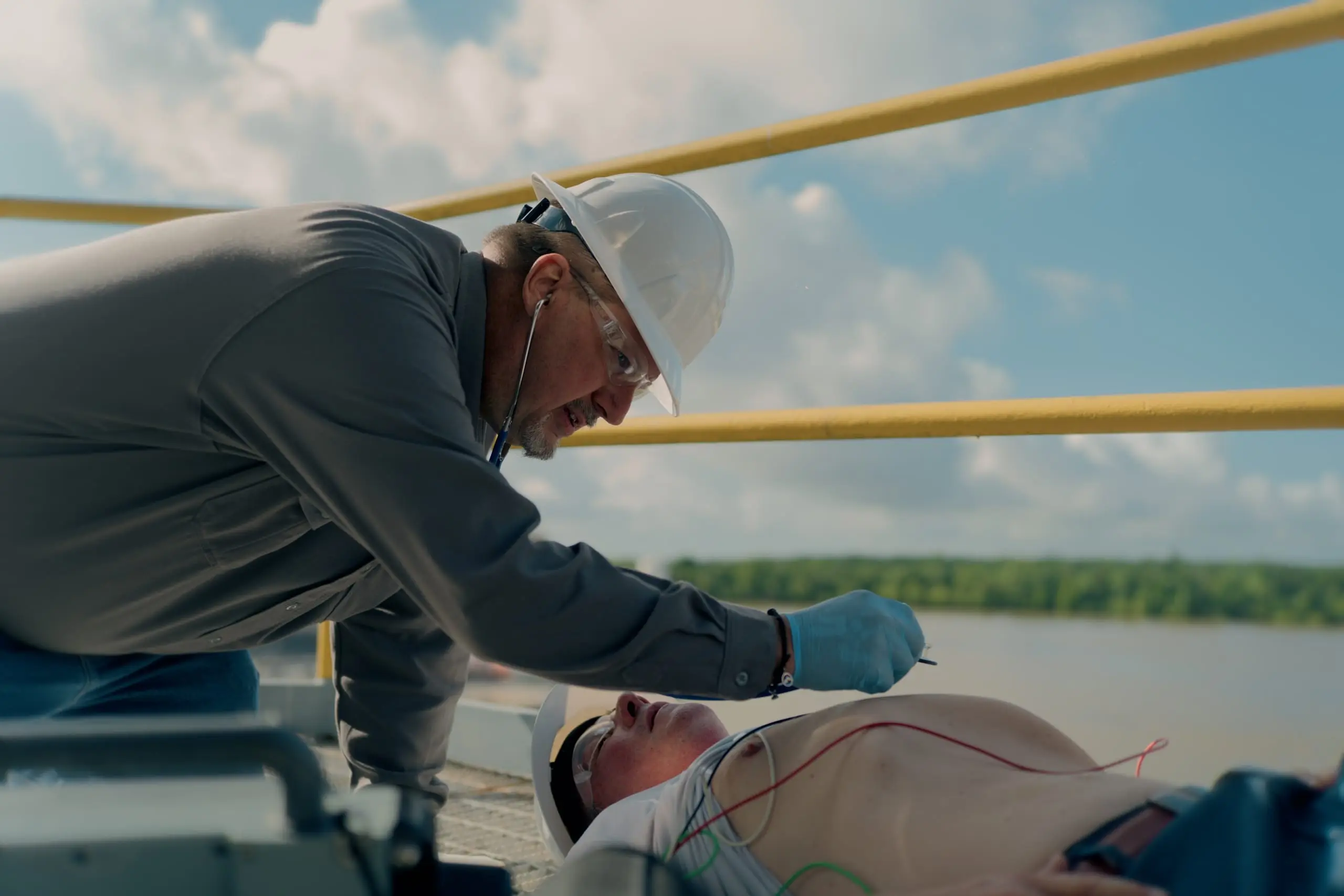
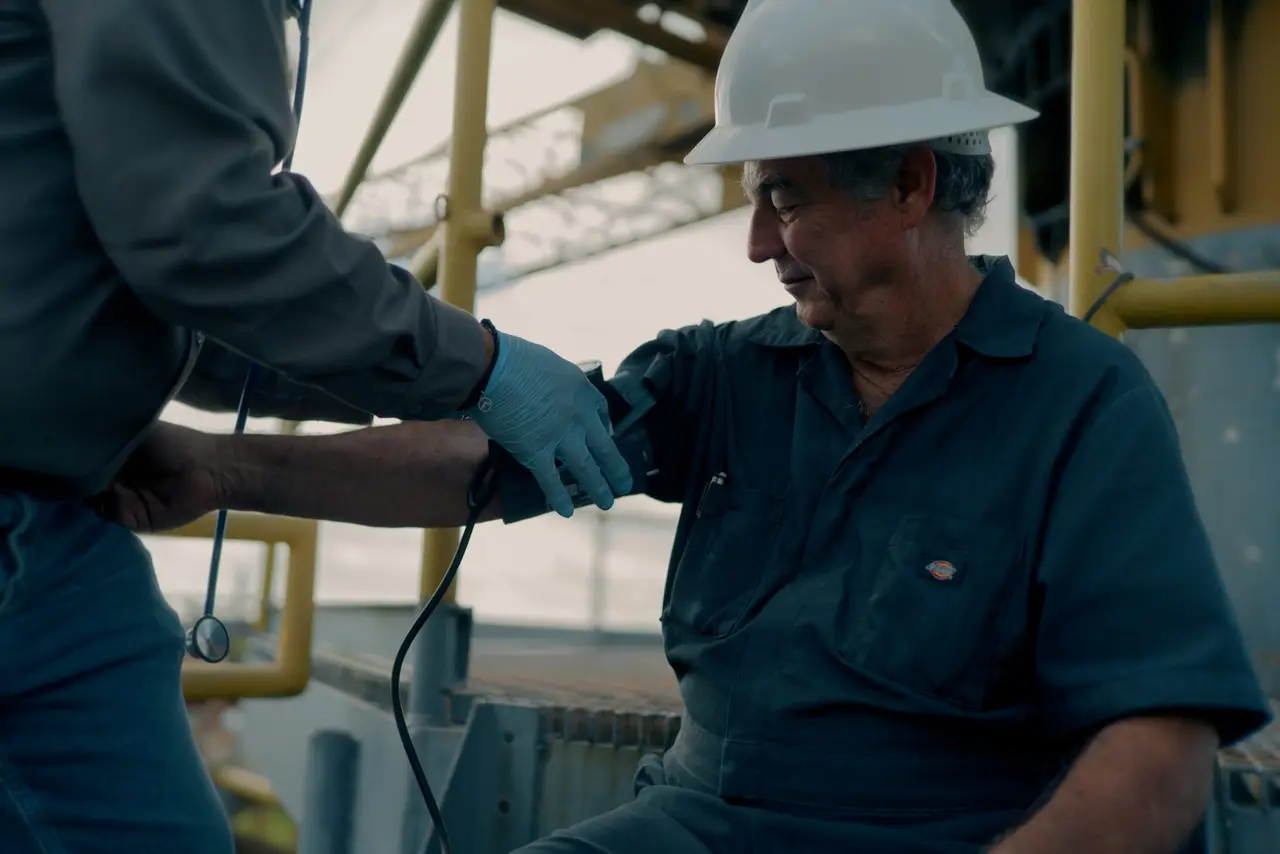
A trauma without trained intervention in the first ten minutes is a different patient by the time the helicopter lands. Our emergent program puts an ACLS-trained paramedic on the deck with the equipment, the medications, and the standing orders to act inside that window — and the dispatch network to get the patient where they need to go next.
Trauma, cardiac, and time-critical care on the deck — not at the hospital two hours away.
Rapid assessment, hemorrhage control, fracture stabilization, burn care, crush injury support, blast injury response, electrical trauma response, severe heat illness management, and confined-space incident support.
Cardiac monitoring, IV therapy, advanced airway management, oxygen, suction, defibrillation, emergency medication administration, and ACLS-level care under standing orders.
Topside physician support for evacuation decisions, aircraft or ground transport coordination, receiving-facility communication, handoff documentation, and clinical escalation.
Asset-specific MERPs that define communication pathways, evacuation routes, receiving facilities, stabilization protocols, and escalation responsibilities.
Triage, resource allocation, multi-casualty response, safety integration, and coordination with client leadership, emergency response providers, and receiving facilities.
Tabletop exercises, full-scale drills, CPR/AED training, first-responder training, emergency simulations, documented lessons learned, and corrective action tracking.
Site-specific protocols rehearsed in advance so every responder, supervisor, and dispatcher knows their role from the moment the radio goes hot.
T + 0 min
Onsite responder activates the EAP, supervisor and medic notified simultaneously, scene assessed for safety.
T + 5 min
ACLS protocol initiated — airway, breathing, circulation. Medications administered under standing orders.
T + 15 min
Medevac dispatched, regional facility briefed, family notification protocol begun, incident logged in the EMR.
T + 45 min
Patient transferred with full chart and treatment record, debrief begins, root-cause review scheduled.